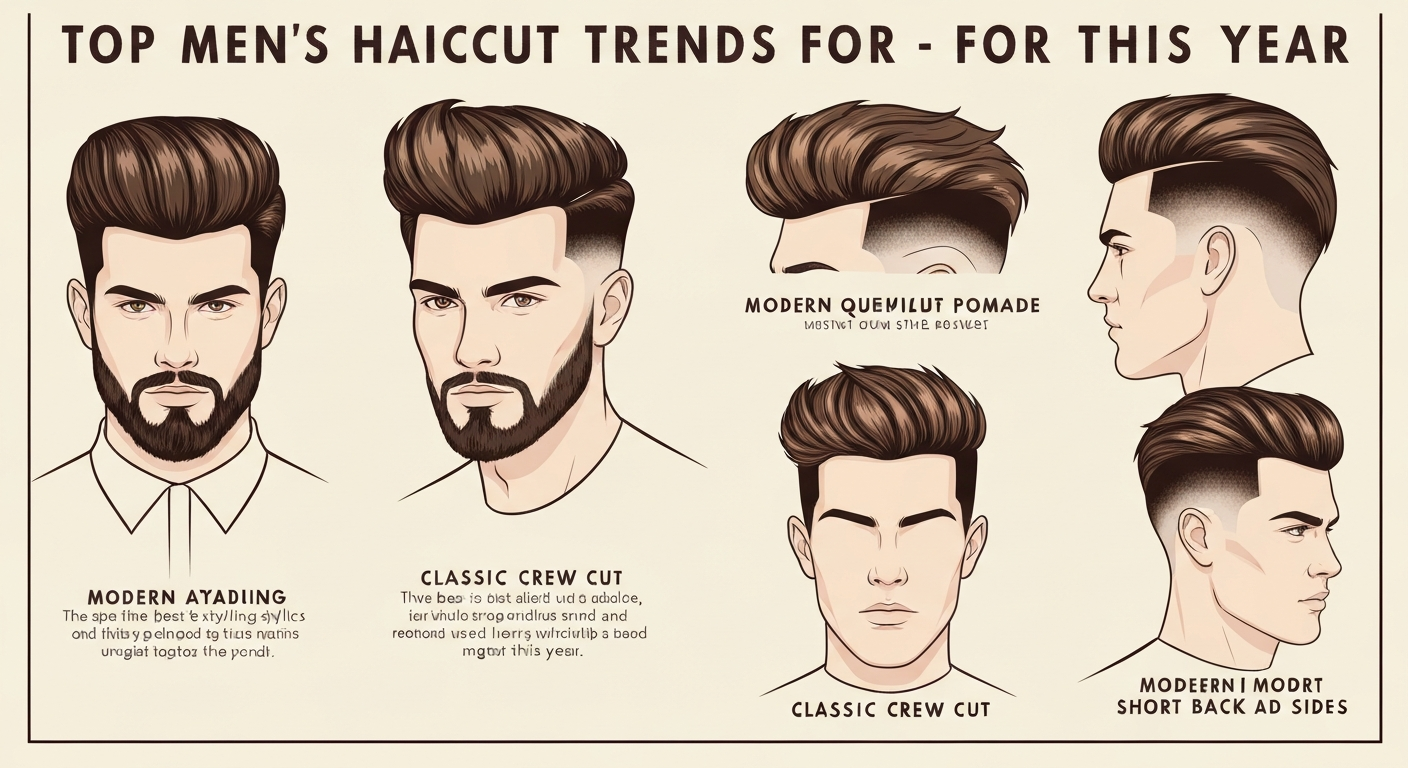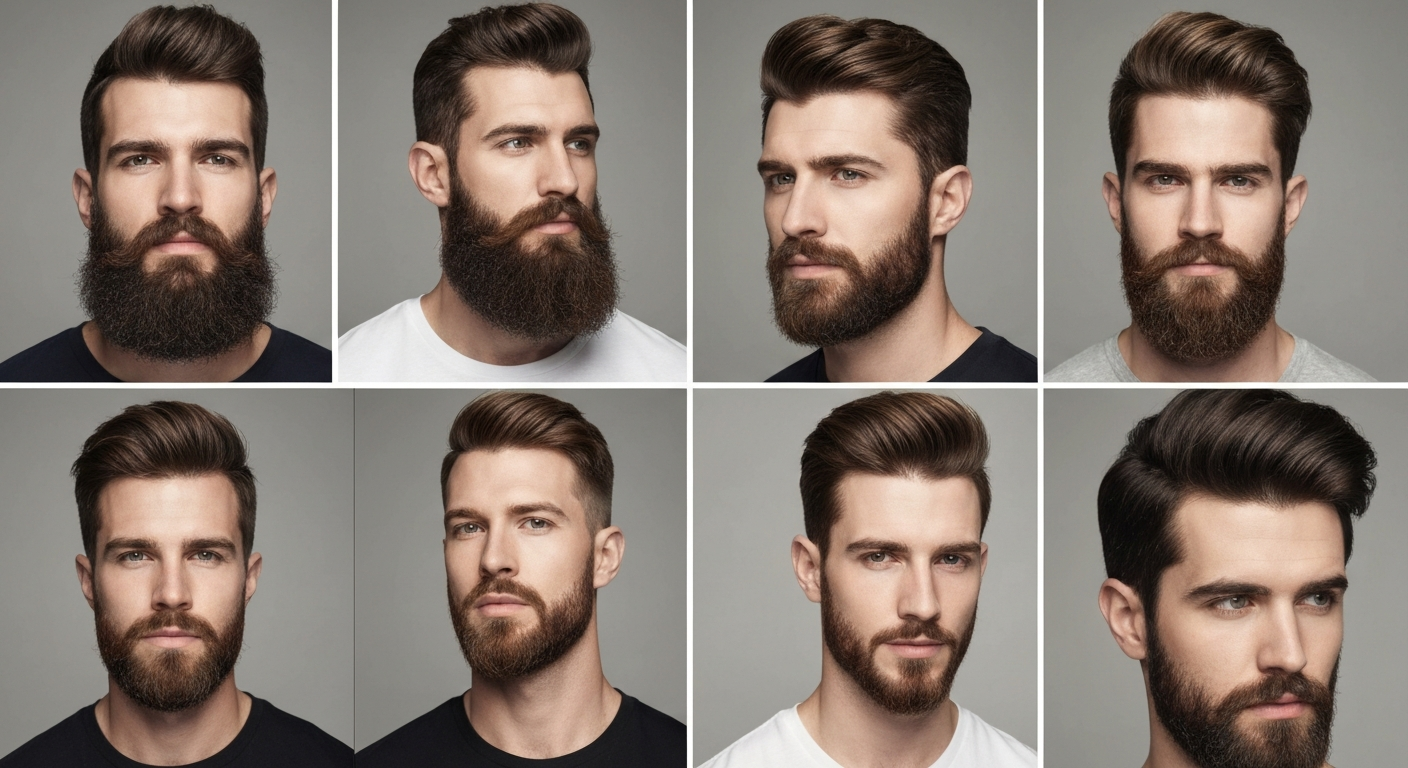
Choosing the right beard style can be a game-changer for your overall appearance. It's not just about growing facial hair; it's about sculpting it to enhance your features, create balance, and complement your unique face shape. Just as a good haircut can transform your look, a well-chosen beard can define your jawline, add maturity, or even make your face appear more proportionate.
But with so many styles out there – from a rugged full beard to a sophisticated goatee – how do you know which one is right for you? The secret lies in understanding your face shape. In this comprehensive guide, we'll break down different face shapes and recommend the best beard styles to help you achieve your most dapper self.
Understanding Your Face Shape
Before diving into specific styles, let's identify your face shape. Stand in front of a mirror and observe your jawline, forehead, and cheekbones. You can also trace the outline of your face on the mirror with a marker. Here are the most common face shapes:
Oval: Forehead is slightly wider than the chin, with high cheekbones and a gently rounded jawline. Considered the 'ideal' shape for versatility.
Round: Face length and width are roughly equal, with soft angles and a full jawline.
Square: Strong, angular jawline, broad forehead, and relatively equal face length and width.
Rectangular/Oblong: Longer than it is wide, with a straight forehead, cheekbones, and jawline.
Triangle: Narrow forehead and wider, more prominent jawline.
Inverted Triangle/Heart: Wide forehead and cheekbones, tapering down to a narrow chin.
Diamond: Wide cheekbones, with a narrower forehead and jawline.
Beard Styles for Each Face Shape
Oval Face Shape
If you have an oval face, consider yourself lucky! This shape is incredibly versatile, and almost any beard style will suit you. The goal is to maintain balance without making your face appear too long or too wide.
Recommended Styles: Practically anything! A classic full beard, short stubble, a goatee, or a beardstache all work wonderfully.
Why it Works: Your balanced features mean you don't need to compensate for any specific areas, allowing you to experiment freely.
Round Face Shape
For round faces, the aim is to add length and definition to create the illusion of a more angular jawline and a longer face. Avoid styles that add width to the cheeks.
Recommended Styles:
- Goatee or Van Dyke: These styles add length to the chin, elongating the face.
- Boxed Beard: A neat, trimmed beard with more hair on the chin and less on the sides.
- Disconnected Beard: A full beard where the sideburns are shaved or trimmed very short, creating a contrast.
Goatee or Van Dyke: These styles add length to the chin, elongating the face.
Boxed Beard: A neat, trimmed beard with more hair on the chin and less on the sides.
Disconnected Beard: A full beard where the sideburns are shaved or trimmed very short, creating a contrast.
Why it Works: By keeping the sides trimmed short and letting the chin area grow longer, you add vertical lines, making your face appear less round.
Square Face Shape
A square face is characterized by strong, angular features. The best beard styles will soften these angles and add a bit of length to balance the width of the jawline.
Recommended Styles:
- Rounder Beards: A full beard that's slightly rounded at the chin.
- Goatee or Van Dyke: Similar to round faces, these can soften a strong jaw.
- Stubble with Rounded Edges: Even short stubble can be shaped to slightly round out sharp jawlines.
Rounder Beards: A full beard that's slightly rounded at the chin.
Goatee or Van Dyke: Similar to round faces, these can soften a strong jaw.
Stubble with Rounded Edges: Even short stubble can be shaped to slightly round out sharp jawlines.
Why it Works: Adding length below the chin and rounding out the corners helps to soften the strong jawline, creating a more balanced appearance.
Rectangular/Oblong Face Shape
Since this face shape is longer than it is wide, the goal is to add width to the sides and avoid adding more length to the chin. This helps to make the face appear shorter and broader.
Recommended Styles:
- Fuller Sides, Shorter Chin: A full beard where the hair on the cheeks is kept relatively full, while the chin area is trimmed shorter.
- Mutton Chops: While bold, this style emphasizes the width of the face.
- Stubble: A well-maintained stubble can add some texture without adding undesirable length.
Fuller Sides, Shorter Chin: A full beard where the hair on the cheeks is kept relatively full, while the chin area is trimmed shorter.
Mutton Chops: While bold, this style emphasizes the width of the face.
Stubble: A well-maintained stubble can add some texture without adding undesirable length.
Why it Works: Emphasizing the sides and keeping the chin shorter helps to visually shorten the face and add width, achieving better proportion.
Triangle Face Shape
With a narrow forehead and a wide jawline, the aim here is to broaden the forehead and jawline, while deemphasizing the prominent chin.
Recommended Styles:
- Heavy Stubble: Can add a bit of width without highlighting the jaw too much.
- Beardstache: A prominent mustache combined with a lighter beard.
- Shorter on Chin, Fuller on Cheeks: Similar to oblong faces, this can help balance.
Heavy Stubble: Can add a bit of width without highlighting the jaw too much.
Beardstache: A prominent mustache combined with a lighter beard.
Shorter on Chin, Fuller on Cheeks: Similar to oblong faces, this can help balance.
Why it Works: The key is to add volume around the cheekbones and keep the chin hair minimal to divert attention from a wide jaw.
Inverted Triangle/Heart Face Shape
This shape features a wide forehead and cheekbones, tapering to a narrow chin. The ideal beard will add width and fullness to the jawline and chin, balancing the broader upper face.
Recommended Styles:
- Full Beard: A well-groomed full beard adds substantial volume to the lower half of the face.
- Goatee with Extended Sides: This can broaden the chin area effectively.
- Chin Strap: While not for everyone, a well-defined chin strap can create the illusion of a wider jawline.
Full Beard: A well-groomed full beard adds substantial volume to the lower half of the face.
Goatee with Extended Sides: This can broaden the chin area effectively.
Chin Strap: While not for everyone, a well-defined chin strap can create the illusion of a wider jawline.
Why it Works: By adding weight and volume to the chin and jawline, you create balance with the wider forehead, making the face appear more proportionate.
Diamond Face Shape
Characterized by wide cheekbones, with a narrower forehead and jawline. The best beard styles will add width to both the forehead and the chin area, while softening the prominent cheekbones.
Recommended Styles:
- Full Beard: A full beard that's slightly rounded or squared can add bulk where needed.
- Extended Goatee or Balbo: These styles add volume around the chin and jaw, balancing the cheekbones.
Full Beard: A full beard that's slightly rounded or squared can add bulk where needed.
Extended Goatee or Balbo: These styles add volume around the chin and jaw, balancing the cheekbones.
Why it Works: Adding volume to the jaw and chin helps to offset the wider cheekbones, creating a more harmonious facial structure.
Final Thoughts on Your Beard Journey
Finding the perfect beard style is a journey of self-discovery and a little bit of experimentation. While these guidelines provide a fantastic starting point, remember that personal preference and maintenance are key. Don't be afraid to try different lengths and shapes, paying attention to how they feel and how they enhance your features.
A well-groomed beard, irrespective of its style, always looks best. Invest in quality beard care products, keep it clean, trim it regularly, and own your look with confidence. Your face shape is unique, and with the right beard style, you can truly master your appearance.